

Buy Category B1 Driving License
On the back of your license On the back of your licence, you will find codes that show the vehicles you are permitted to drive. These codes also show your rights and restrictions.
The Category B1 on some licenses permits you to drive an automobile with an maximum weight of 8,250kg, and towing trailers up 750kg MAM.
Cost-effective transport
If you're looking to travel but don't wish to spend the money on a car, then consider renting or buying a Category B1 licence. This category allows you to ride mopeds and motor tricycles. These vehicles are fairly inexpensive and require very little storage space. Comprar carta de condução da categoria C tend to be more fuel efficient than a car. In addition, there are services like Uber and Lyft that offer ride sharing for a much less expensive cost than renting or purchasing vehicles.
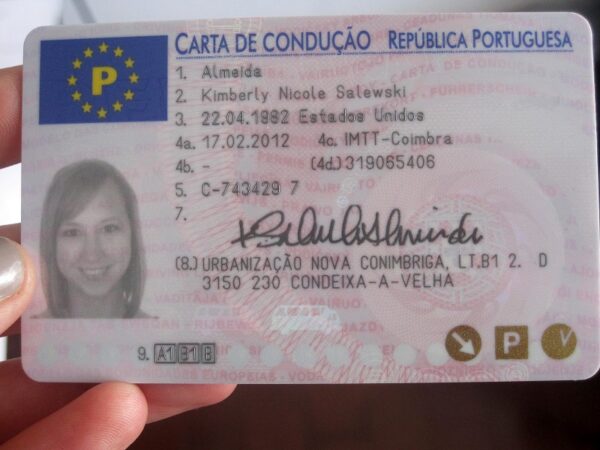
A category B1 licence permits you to operate motorcycles with an engine size that is 125cc or a power-to-weight ratio that is not more than 0.1 kg/kW and a light quadricycle (a four-wheeled vehicle that has an unladen mass of not more than 350kg, including the battery). To be eligible for a license in this category you must be 17 years old. You must also pass a theory test and a practical driving exam to be able to get this license.
A driving license contains a lot of personal information about the driver. This includes their name and the name of their father, the date of birth and address, car types that are authorized as well as emergency contact details blood group, fingerprint impressions, in addition to the driver's photograph and a photo. The NDLS started to issue electronic licences in January 2014 which contain a microchip. The microchips used in these licences identify and protect the identities of those who hold licences. Police officers may also use them to verify the information of drivers in certain scenarios, like during a traffic crash.
Categories on a licence dictate the kind of vehicle you are allowed to drive, and codes provide an additional layer of information about the driver. These codes contain restrictions, such as whether or not you are allowed to drive trailer. They can also specify whether or not you are able to drive a minibus, as well as the towing limits of the vehicle and trailer combination.
The codes on your licence could be very beneficial to you however, it is important to remember that they are not lawful. Some of the categories listed on your license may not be available. In Ireland, for example B1 isn't available.
Reduced Environmental Impact
In a world of constantly changing mobility needs and ever-changing urban environments The B1 category driving license provides an array of options for those seeking cost-effective and environmentally conscious transportation alternatives. The permit that is specialized, which allows drivers to operate a range of light motor vehicles as well as trailers, is an essential component of the European Union's efforts to reduce emissions from carbon dioxide and air pollution. emissions. This is especially important in urban settings where specialized permits can greatly improve traffic flow and boost the efficiency of vehicles' operations.
At present, B licence holders can only drive passenger cars with maximum authorised masses up to 3,500 kg and a trailer of not heavier than 750kg. This excludes vehicles such as trucks and vans, which must be driven in the category N2. EEA licence holders can also drive motor vehicles registered in Category N2 in Norway or another EEA member state provided they meet certain conditions documented by an entry on the registration certificate of the vehicle.
Other AFVs, such as motorhomes and campervans as well in special vehicles for disabled people come with onboard equipment that increases their weight. This could take them over the allowance of 3,500kg of a standard licence. On top of that certain vehicles for goods like those used in emergency services and local authority fleets are required to have equipment onboard to increase their payload. This can push them over the 3,500kg allowance on a standard license.
The new licence, which was introduced in 2011, resembles the European driving licence in terms of dimensions and appearance. It has the bearer's name and date of birth (in Latin and Cyrillic scripts), driving history, permitted categories, place/date of issue, and a photo. It is fully compliant with the Vienna Convention on Road Traffic and replaces the older booklet-style and credit-card-style licences, which are still occasionally used.
A B licence holder must pass both the theory-based test as well as an actual driving test in order to obtain their license. The licence is divided into two pages: the first contains the basic details, including the number of a driving licence authorizations and restrictions and the validity time. The second page is comprised of the barcode and photo of the driver's details as well as blood group and fingerprint impression. The person who holds the licence must always keep it in their possession.
Practicality in Urban Settings
The B1 licence is a kind of driving license that permits the driver to drive vehicles with up to eight seats and trailers of up to 500kg. It is a convenient method of transporting large groups of people around town and suburbia. You must pass both a theory and a practical driving test to obtain this license. You must also pass a medical test to be able to get the license. Mock tests are important in preparing you for the actual theory test and help you determine areas in which you're required to improve.
The driver has to demonstrate their competence driving the vehicle and also demonstrate familiarity with traffic signs and rules. The theory test consists of multiple-choice answers that must be completed in order to take the practical driving test. The test can be taken either online or at an in-person centre. You must schedule your test date in advance to avoid late-night delays or cancellations.
After passing the test in the theory section, you will receive a provisional B1 licence. You must pass a driving test to get your full licence that will grant you full category B rights, as well as category BE (bus) entitlement. Minibuses can be driven for community transport in section 19 or 22 but only under certain conditions and with stricter towing restrictions.
If you own a photocard that was issued prior to 1997 and you have an authorization issued prior to 1997 the photocard will have C1 and D1 entitlement. However, you will require a medical report from a doctor or an optometrist's note to renew this entitlement when you reach 45 years of age. Similarly, anyone with C1 or D1 rights on an old paper licence is able to keep this right despite no medical evidence until they reach 70 years old however, they will have to present a medical report to renew their licence when they reach 45 and then every five years.
The B1 licence also permits the owner to drive motor tricycles with the power output of 15kW if you are over 21. This licence does not allow you to drive lorries, buses or motor tricycles. It is recommended to go through instruction prior to purchasing a Category B1 license, as learning to drive isn't simple.
Eligibility
You must be at least 16 years old to purchase an driving licence in category B1. You must pass a computer-based theory test and submit a valid application form to get a driving licence. You must also submit the passport-style color photo and proof of address, PPSN, and an eyesight report if necessary. Candidates are not allowed to drive unaccompanied on motorways and must display red L plates on their vehicle or a tabard if they are a motorcycle driver. A Swiss category B driving license permits drivers to drive vehicles that weigh up to 3,500 kilograms in maximum authorized mass (MAM). You can also tow a trailer up to 750kg, provided that the weight of your vehicle does not exceed its MAM. You can also drive mopeds and tricycle motorcycles that have three, two or four wheels.
Licence categories are a system of codes found on the back of your driving licence that inform you of the type of vehicle you're able to drive and what kind of driving license you've got. On Comprar carta de condução da categoria A about Licence Codes you can learn more about the different categories. You can apply for additional provisosual entitlements on the basis of these categories. If you pass the test to obtain a full licence for a lorry or bus for instance you'll automatically be granted a provisional license in category D1. If you pass the tests in categories BE or C1+E, you can also operate vehicles that require an operator's licence.
If you're a vehicle driver, you must always keep your driving license and clearly display it on the dashboard or windscreen of your vehicle. It is used to prove your identity and assist police in identifying drivers who are suspected of driving drunk or committing offences. It is crucial to take test questions regularly so that you can improve on your knowledge of road signs and regulations.
If you pass the test in category B, you can drive a minibus up to eight seats. However, it must not be driven for hire or as a reward. If you wish to be able to drive a vehicle with more than eight seats or a trailer weighing more than 750 kilograms MAM, you will require category D1.